Egypt, China Join Forces on 2,000MW Wind Project as New Factory Targets African Market
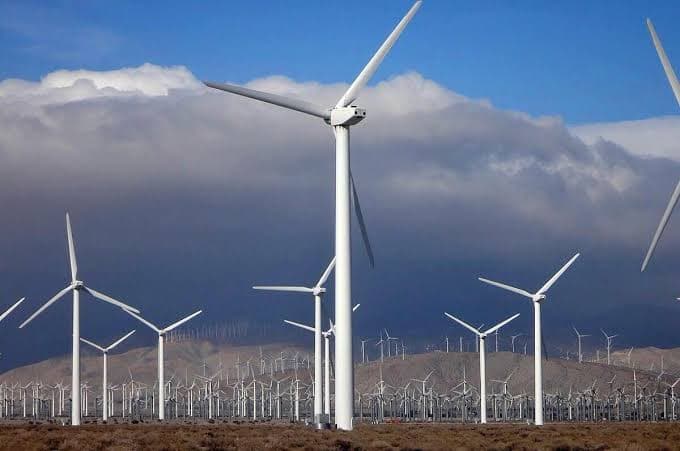
Wind project
Egypt is turning a major clean-energy project into a broader industrial ambition, teaming up with China to generate power, manufacture wind turbines and potentially supply renewable-energy equipment across Africa.
Egypt is taking a different approach to its renewable-energy ambitions — one that goes beyond simply building another power plant.
The country is partnering with Chinese renewable-energy giant SANY Renewable Energy on a 2,000-megawatt wind project in the Gulf of Suez, while also developing what is expected to be Egypt’s first wind-turbine manufacturing plant.
The combination of electricity generation and local manufacturing is putting Egypt at the centre of a growing conversation about whether Africa can use its clean-energy transition to build industries, create technical skills and reduce dependence on imported equipment.
From wind farm to manufacturing hub
The planned project is expected to connect to Egypt’s national grid within about 23 months after the final agreements are completed.
But the manufacturing component could prove just as significant.
The planned factory is designed to produce wind turbines for Egypt’s domestic market, with the potential to eventually supply equipment to other countries across Africa and the Middle East.
That could give Egypt a new position in the renewable-energy supply chain.
Rather than importing every turbine needed for large-scale wind projects, the country is seeking to develop local production capacity around the technology.
For Africa, where many countries are racing to expand renewable-energy generation while relying heavily on imported equipment, that distinction could become increasingly important.
China brings technology and scale
China’s role is central to the project.
SANY Renewable Energy brings experience in wind-turbine technology and large-scale manufacturing, while Egypt provides a growing energy market and a strategic location linking Africa, the Middle East and global trade routes.
The partnership is also expected to support technology transfer and the development of local technical capabilities.
For Egypt, the goal is not simply to add more electricity to the national grid. It is also to create an industrial base around renewable energy.
That could mean opportunities in engineering, installation, maintenance, logistics and other areas connected to the wind-energy value chain.
Why the 2,000MW figure matters
A 2,000MW wind project represents a substantial addition to Egypt’s renewable-energy capacity.
The project is also being structured in local currency, a feature that could reduce some of the foreign-exchange pressures that have affected infrastructure projects across Africa.
Energy projects often require huge upfront investment, while revenue may be generated in local currencies. When projects depend heavily on foreign currencies, exchange-rate movements can increase costs and complicate financing.
Egypt’s approach is therefore being watched beyond its borders.
Could Egypt supply the rest of Africa?
The bigger question may be what happens after Egypt’s domestic market is served.
If the manufacturing plant reaches its intended scale, it could potentially supply wind-energy equipment to other African markets.
That would place Egypt in a position to participate not only as an energy producer but also as a manufacturer within Africa’s emerging clean-energy economy.
It also comes at a time when African countries are under pressure to expand electricity access while reducing dependence on fossil fuels and imported energy technologies.
For countries with smaller domestic markets, regional demand could make manufacturing more commercially viable.
Nigeria offers a striking comparison
The development has particular relevance for Nigeria.
Nigeria has significant renewable-energy potential, but some projects have faced long delays.
The country’s 10MW Lambar Rimi wind project in Katsina State, for example, took years to move from planning to actual operation and was eventually commissioned in 2025 after the state added solar capacity.
The contrast has raised a broader question for African policymakers: should countries focus only on importing renewable-energy equipment, or should major projects also be designed to build local manufacturing and technical capacity?
Egypt’s new approach attempts to address both issues at the same time.
A bigger China-Africa opportunity
The Egypt-SANY partnership also reflects the expanding role of Chinese companies in Africa’s energy transition.
China has become a major player in renewable-energy manufacturing, particularly in areas such as solar power, batteries and wind technology.
For African countries, Chinese investment can provide access to technology, financing and manufacturing expertise.
But the long-term value will depend partly on the terms of those partnerships — particularly how much technology, skills and industrial capacity remain within African economies.
Egypt’s project therefore represents more than a new wind farm.
It is an experiment in whether a major China-Africa energy partnership can help build an industrial ecosystem around renewable power.
If the manufacturing component delivers as planned, Egypt could move from being primarily a buyer of renewable-energy equipment to becoming a supplier for other African markets.
And that could make the Gulf of Suez project relevant far beyond Egypt’s borders.
Sarah Kadiri
News Correspondent
Communiqué de presse officiel du secrétariat
Transmis par le Département du Commerce et des Investissements du Secrétariat de l’ACCBCF et le Centre International des Médias au Ministère Fédéral de l’Industrie, du Commerce et des Investissements, Abuja, Nigeria.