Nigeria-China Energy Partnership Takes Centre Stage As Lagos Expo Opens New Investment Frontiers
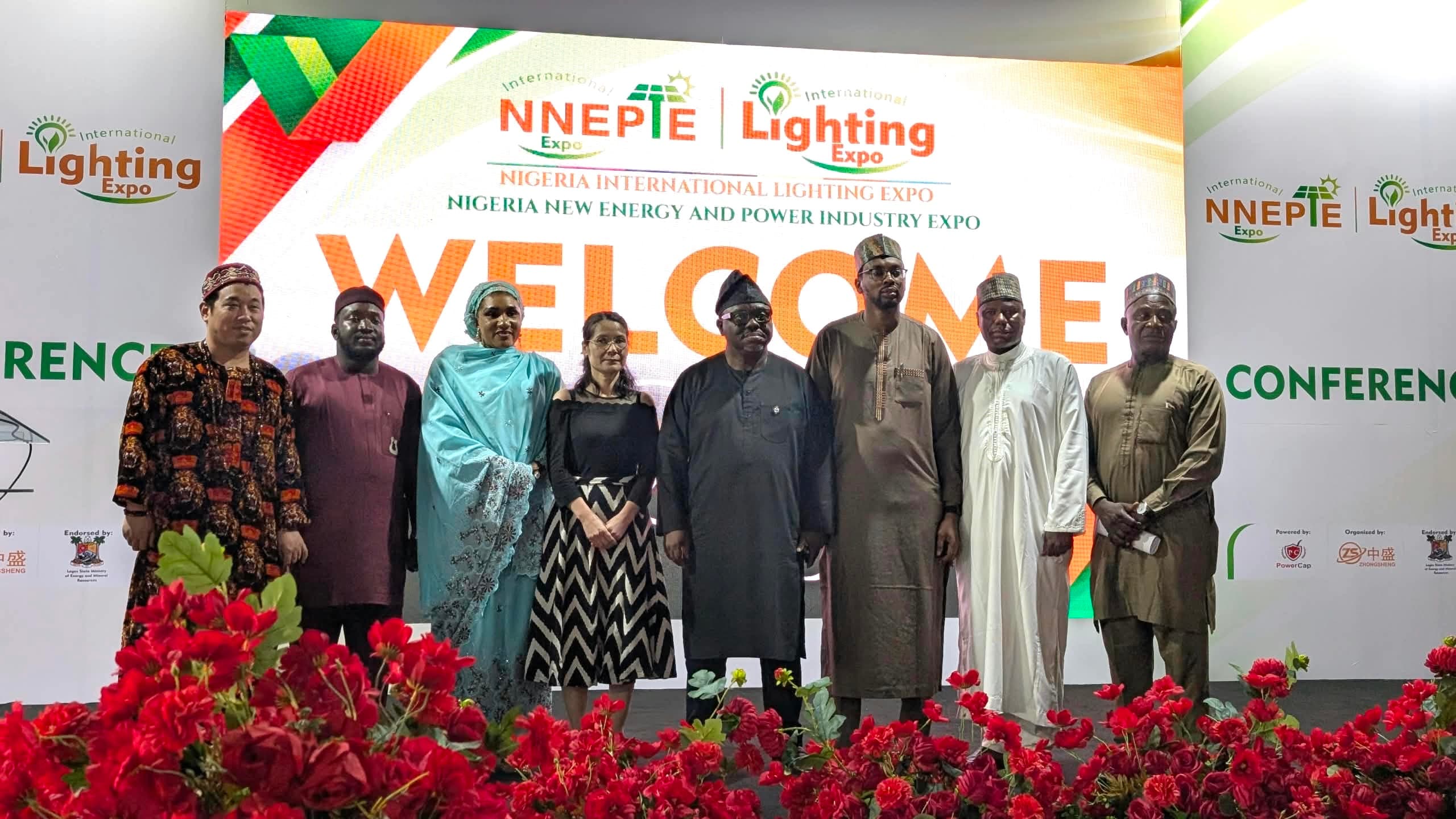
Nigeria’s drive to build a more reliable, affordable and sustainable energy system took centre stage in Lagos as government officials, investors, manufacturers and technology providers from Nigeria, China and other countries gathered for the Nigeria International New Energy and Power Industry Expo and International Lighting Exhibition 2026.
The three-day exhibition brought together stakeholders in the power, renewable energy, energy storage and lighting industries at a pivotal moment for Nigeria’s energy transition.
The conversations covered more than electricity generation, with participants seeking to identify investment opportunities, technology transfer, local manufacturing, smart technology, energy efficiency and partnerships that could transform Nigeria’s energy sector.
China-Nigeria Cooperation Takes Centre Stage
A key issue for discussion at the exhibition was the opportunity to build stronger economic and technological cooperation between Nigeria and China.
In her goodwill message, a representative of the Chinese Consulate General in Lagos Yan Yuquing spoke about the growing China-Africa and China-Nigeria trade relationship while encouraging businesses to use the exhibition as a platform to explore investment, technology exchange and innovation.
She identified opportunities in smart lighting, artificial intelligence, energy-efficient technologies and green and low-carbon solutions.
In her address, the message also stressed the need to turn China’s technological capabilities into partnerships that can advance Nigerian industries and communities.
For Chinese and Nigerian businesses, this means looking beyond the supply of technology equipment to opportunities in technology transfer, skills development, local manufacturing, financing and long-term project delivery.
Nigeria Seeks Local Manufacturing
Another key message from the exhibition was Nigeria wantin international investors to play a role in supporting local manufacturing in the country.
Representatives of the Federal Ministry responsible for industry stressed the need for investors to go beyond simply supplying equipment such as solar, lighting and power equipment and explore partnerships in local assembly and manufacturing.
Nigeria is looking to leverage available resources and manpower to boost local value chains.
The emphasis was on Nigeria’s industrialisation agenda, which seeks to increase domestic value addition, technology acquisition, skills development and participation in global value chains.
Government incentives and investment-support measures were also identified as tools available to support productive investment, subject to applicable laws and guidelines.
REA Links Energy Access To Economic Development
The Rural Electrification Agency also highlighted the knock-on benefits of electricity access to Nigerians.
For the REA, energy access cuts across economic growth, healthcare, education, business development and community empowerment.
The agency continues to implement a range of interventions covering grid and off-grid electrification, renewable-energy mini-grids, solar home systems and productive-use applications alongside public-sector electrification.
However, government officials emphasised the need for private investors, technology providers, financial institutions, development partners and state governments to work together to scale up solutions and reach unserved communities.
Lagos Positions Itself For Energy Investment
Lagos State used the exhibition to highlight its electricity market potential to investors.
The state, which hosts the exhibition, has a huge electricity demand given its large population and the number of businesses and industries.
Authorities noted that decades of unstable electricity supply have forced many businesses, households and public institutions to invest in self-generation, typically using petrol and diesel.
The state is now looking to pivot.
It plans to facilitate about 6GW of available generation capacity within the next few years about 4GW from gas and 2GW from renewable, cleaner energy.
But officials recognised that generation alone will not address the state’s electricity needs.
There is a need to invest in transmission and distribution, gas, metering, storage, embedded generation, renewable energy and modern electricity-market systems.
The state is also pursuing renewable energy to power public infrastructure coupled with smart solar street lighting, cleaner transportation, compressed natural gas (CNG), electric mobility, hospital electrification and electrification of schools and other key facilities.
Kano Opens Its Energy Market to Investors
Another key message that emerged from the exhibition is that Kano State is an emerging energy market with investment potential.
The state emphasised the need to boost energy efficiency across households, markets, businesses and industries.
Authorities noted that rising energy costs were increasingly impacting businesses and the need to create a more conducive environment for power production and consumption.
The 10-megawatt Hasken Power Plant in the Shanawa Industrial Cluster was presented as one component of Kano’s energy-development agenda.
The state is also pursuing initiatives targeted at both grid-served and underserved communities and asked investors and technology providers to explore opportunities in Kano.
The state’s message was that it is looking for partnerships that can bring investment, technology and other resources to develop industries and boost economic activity.
Turning Technology Into Industrial Growth
Across the board, participants at the exhibition have identified a range of technologies with the potential to reshape Nigeria’s energy landscape.
These include solar power, battery storage, smart grids, efficient lighting, intelligent streetlights, mini-grids, electric mobility, advanced metering, digital energy management and gas-to-power.
Artificial Intelligence is also increasingly being discussed, particularly in relation to smart lighting and intelligent energy systems.
The Chinese side emphasised the need to move AI and other technologies from the digital realm to the real world and create value in production and in everyday life.
For Nigeria, that means finding ways to make these technologies accessible and affordable at the grassroots level.
Beyond Equipment Sales
One of the key themes of the exhibition is the need to move beyond a simple buyer-seller dynamic.
Nigeria is looking for partnerships that can include technology transfer, local manufacturing, skills development, financing and sustainable project development.
That opens the door for Chinese companies and other international investors to establish manufacturing and assembly plants in Nigeria while partnering with local businesses and institutions.
It also offers an opportunity for Nigeria to reduce its reliance on imported solar power equipment and build local business capabilities.
A New Opportunity For Nigeria’s Energy Transition
The Nigeria International New Energy and Power Industry Expo and International Lighting Exhibition 2026 has brought together many of the key ingredients for Nigeria’s energy transition: technology, capital, policy, investment and industrial partnerships.
The question now is how these conversations can be translated into projects that can improve electricity access, reduce energy costs and strengthen Nigerian businesses.
For Nigeria and China, the opportunity is particularly significant, with the potential to build a deeper partnership in renewable energy, smart technology, energy efficiency, energy storage, electric mobility and local manufacturing.
As the exhibition brings together investors, manufacturers, policymakers and technology providers, the message is becoming increasingly clear: Nigeria’s energy transition is not only an infrastructure challenge. It is also an investment opportunity, a jobs opportunity and a platform for international partnerships.
Sarah Kadiri
News Correspondent
Comunicado de imprensa oficial da secretaria
Transmitido pelo Departamento de Comércio e Investimentos da Secretaria da ACCBCF e Centro Internacional de Mídia no Ministério Federal de Indústria, Comércio e Investimentos, Abuja, Nigéria.