XI–TRUMP TALKS: WHAT CHINA–US RELATIONS COULD MEAN FOR AFRICA
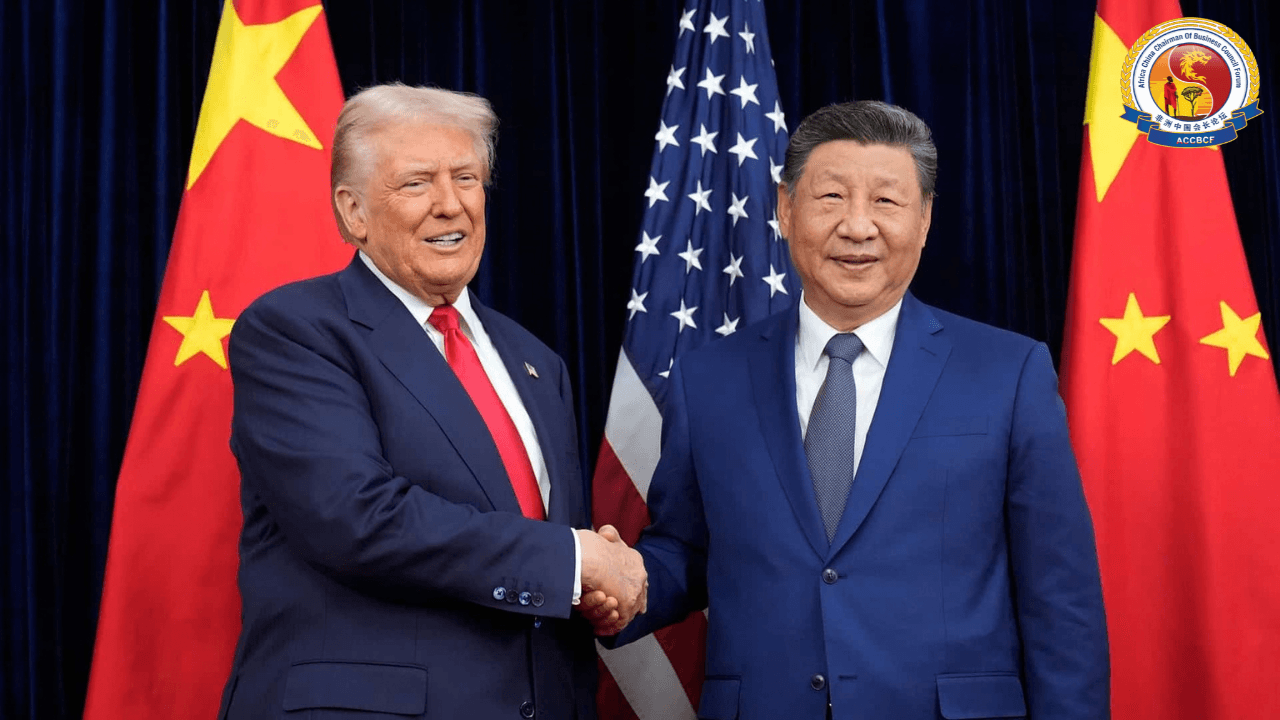
XI-TRUMP MEETING
A 21-gun salute echoed across Washington as military aircraft flew overhead, marking the ceremonial welcome for Chinese President Xi Jinping during his state visit to the United States. Chinese President Xi Jinping arrived in Washington on September 23 for a state visit and was received by U.S. President Donald Trump at Joint Base Andrews. The following day, Xi was formally welcomed at the White House before meeting Trump for talks. While the discussions centre on China–US relations, their outcome could have implications for African economies, particularly in trade, manufacturing, technology, currencies and global supply chains.
Trade Shifts Could Affect African Markets
China–US trade remains a major factor in the global economy. Changes in tariffs and trade policies between the two countries can influence supply chains, export markets and competition in third countries. Africa has become an important market for Chinese products, including electric vehicles, motorcycles, solar equipment, batteries, machinery, smartphones and construction materials. Any significant shift in global trade patterns could encourage Chinese companies to expand into new markets, including Africa. This could create opportunities for African businesses through access to technology, equipment and investment, while also increasing competition for local manufacturers.
Dollar Movements Remain Important
Currency movements are another area African businesses will be watching. The US dollar remains central to much of Africa’s international trade, commodity transactions, energy purchases and equipment imports. Changes in global investor sentiment linked to China–US relations, US monetary policy or geopolitical tensions can affect exchange rates and financing costs. For businesses importing Chinese machinery and equipment, currency fluctuations can directly influence operating costs, shipping expenses and profit margins.
China’s African Engagement Is Moving Beyond Trade
China–Africa economic relations are also increasingly moving beyond the traditional exchange of goods. Chinese companies are expanding their presence in areas such as electric vehicles, renewable energy, battery storage, power equipment, digital infrastructure and manufacturing. This is creating a growing focus on local assembly, skills development, after-sales services and technology transfer. For African economies, the bigger opportunity lies in attracting investment that supports local production and connects businesses to regional value chains.
AI Adds a New Dimension
Artificial intelligence is another area where China–US competition and cooperation could have wider global consequences. AI is already changing e-commerce, logistics, customer service, translation, advertising and supply-chain management. For Africa's growing digital economies, developments in AI could also shape investment in data centres, cloud computing, digital finance, education and energy infrastructure. How the two major powers approach AI technology and its regulation could therefore influence the technologies available to African businesses and consumers.
Global Stability Matters to Africa
The wider China–US relationship also matters because African economies are closely connected to global markets. Geopolitical tensions can affect energy prices, shipping costs, currencies and access to international financing. Disruptions to global supply chains can quickly increase the cost of imports across African markets. The Xi–Trump meeting therefore carries significance beyond the White House. For Africa, attention will be on what follows: the direction of China–US trade, changes in global supply chains, investment flows, technology cooperation and the broader stability of the international economy. In an interconnected world, decisions made in Washington and Beijing can eventually be felt in African factories, ports, businesses and households.
Dorcas chia
News Correspondent
Comunicado de imprensa oficial da secretaria
Transmitido pelo Departamento de Comércio e Investimentos da Secretaria da ACCBCF e Centro Internacional de Mídia no Ministério Federal de Indústria, Comércio e Investimentos, Abuja, Nigéria.