From the Yellow River to modern technology, China's history reveals a lasting legacy of innovation, culture and global exchange.
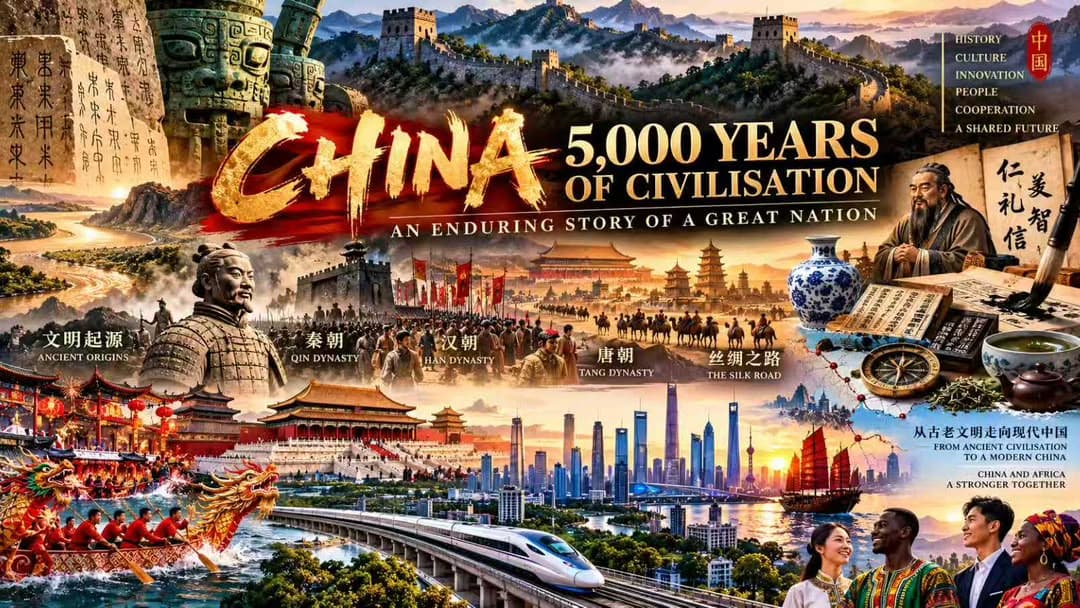
China Through 5,000 Years of History and Cultural Heritage
How does a civilisation preserve its identity for thousands of years while continuing to shape the modern world? China's history offers a remarkable answer.
From ancient river settlements to modern high-speed railways, China has experienced dynastic changes, scientific breakthroughs and cultural transformations. Yet many of its traditions remain part of everyday life.
How China's Ancient Civilisation Began
China's early civilisation developed around the Yellow and Yangtze rivers. These waterways supported farming, settlements and the growth of organised societies.
Over time, communities developed advanced skills in agriculture, pottery and bronze craftsmanship. Oracle bone inscriptions from the Shang Dynasty also preserved some of the earliest known forms of Chinese writing.
A major turning point came in 221 BC. Qin Shi Huang unified several warring states and established China's first imperial dynasty. His government introduced standardised writing, weights and measures to strengthen unity across the empire.
The Han Dynasty later expanded China's influence. Trade routes connected Chinese merchants with Central Asia and regions farther west, helping goods, ideas and cultural practices travel across borders.
The Silk Road Connected China to the World
China's history has long been shaped by international exchange.
During the Tang Dynasty, from 618 to 907 AD, the capital, Chang'an, became a major centre of trade and culture. Merchants, diplomats, scholars and travellers arrived from different parts of Asia and beyond.
The Silk Road helped spread silk, ceramics and other Chinese goods. It also supported the movement of religions, technologies and ideas between societies.
These connections demonstrate that China's development was not isolated from the rest of the world. Trade and cultural contact played important roles in its growth.
Philosophy, Art and Traditions That Endured
China's influence extends beyond trade and political power. Its philosophical traditions have shaped social values across generations.
Confucius emphasised moral responsibility, respect, education and social harmony. His teachings became an important influence on Chinese society and several other East Asian cultures.
Chinese calligraphy developed into a respected art form. Traditional landscape painting explored the relationship between people and nature.
Tea culture also became an important part of social life. Meanwhile, Chinese porcelain travelled across international trade networks, reaching markets in Asia, Africa and Europe.
Festivals such as the Spring Festival and Dragon Boat Festival continue to preserve customs, family connections and community identity.
These traditions show how cultural heritage can survive while adapting to changing generations.
Four Ancient Inventions That Changed the World
China's scientific and technological achievements form another important part of its legacy.
Four inventions are particularly well known for their global influence:
- Papermaking: Improved the production and circulation of written information. - Printing: Helped expand the reproduction and distribution of texts. - The compass: Supported navigation and long-distance maritime travel. - Gunpowder: Transformed military technology and later influenced other applications.
These inventions spread beyond China through trade, travel and cultural contact. Their influence contributed to technological changes across different parts of the world.
China's architectural heritage also reflects its long history. The Great Wall represents centuries of defensive construction, while Beijing's Forbidden City preserves the legacy of imperial rule.
Modern China: From Historical Legacy to Technological Progress
China's story did not end with its ancient dynasties.
Today, the country combines its cultural heritage with large-scale economic and technological development. High-speed railways connect major cities, while modern infrastructure supports transport, trade and industrial growth.
China has also expanded its presence in areas such as renewable energy, digital technology, manufacturing and scientific research.
These developments reflect the country's continuing efforts to adapt to new challenges while maintaining links to its historical identity.
However, modern China is also shaped by changing social needs, economic pressures and debates about its future. Its development is therefore a continuing story rather than a completed achievement.
China and Africa: From Trade Routes to Modern Partnerships
China's historical connections with Africa form an important part of the wider story of international exchange.
Maritime trade across the Indian Ocean linked Chinese goods with African coastal markets centuries ago. Chinese ceramics and other products have been found at historical trading sites along parts of the East African coast.
Today, China-Africa relations extend across infrastructure, manufacturing, agriculture, education, technology and cultural exchange.
In Nigeria and Ghana, cooperation with China has become particularly relevant to discussions about trade, investment, industrial development and transport infrastructure.
These partnerships can create opportunities for economic growth, skills development and technology transfer. Their long-term benefits, however, depend on effective implementation, local participation and outcomes that serve the interests of African communities.
Cultural exchanges and educational programmes also help people on both sides develop a deeper understanding of one another.
From historical maritime connections to contemporary business partnerships, the relationship continues to evolve with changing economic and diplomatic priorities.
Why China's History Still Matters
China's history is more than a record of emperors, wars and monumental buildings. It is a story of ideas, craftsmanship, scientific discovery and cultural continuity.
Its experience also highlights the importance of trade, adaptation and exchanges between societies.
As China continues to develop, its historical legacy remains part of its national identity and international relationships.
From the ancient Yellow River settlements to today's modern cities, the journey spans thousands of years of change and achievement.
Five thousand years of history. Generations of innovation. A civilisation still shaping the world.
Dorcas chia
News Correspondent
论坛秘书处官方新闻公告
本动态由非洲中国会长论坛阿布贾常设秘书处经贸投资部与国际传媒中心联合发布,拥有唯一官方解释权。